
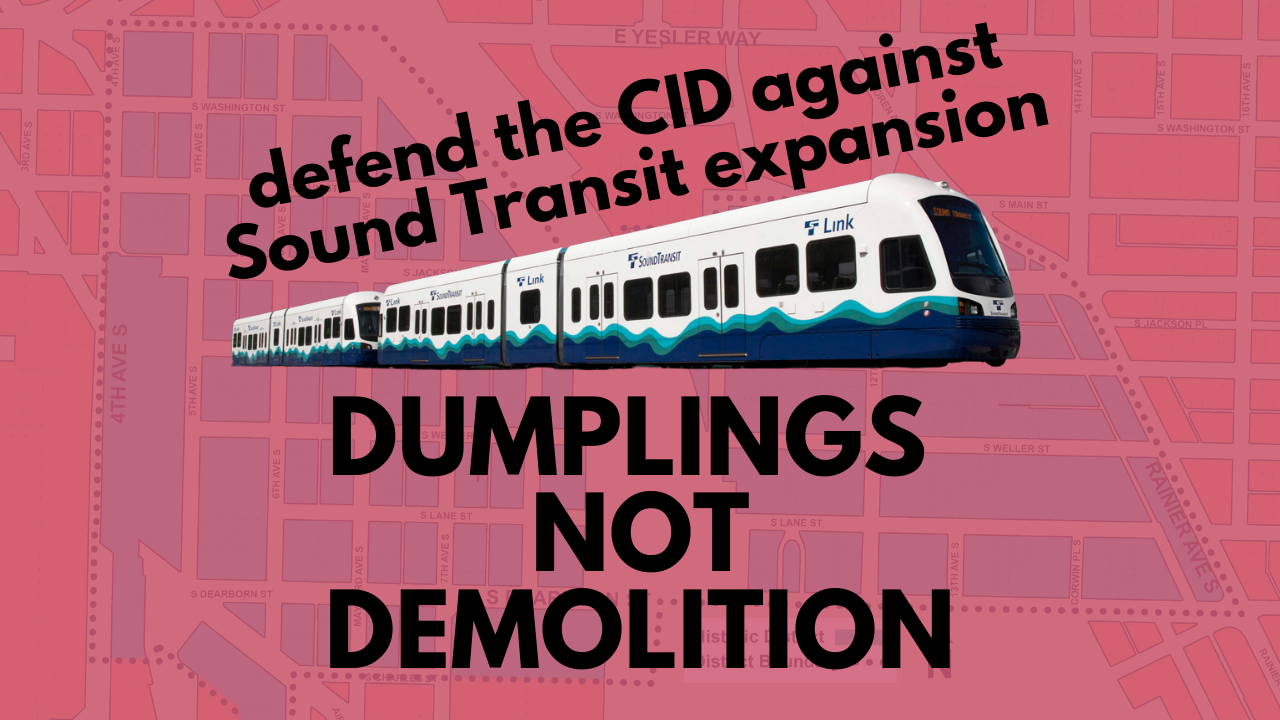
Sound Transit
Pro public transit. Anti displacement!
What’s Going On?
There are currently plans for a new CID Link light rail station that would displace, disrupt, and demolish the center of our neighborhood.
The CID has already seen the harms of massive infrastructure projects that inequitably effect low-income people of color (I-5, Kingdome, current light rail, current stadiums)
This neighborhood has faced many threats and injustices. Sound Transit’s decision to displace the CID is just another act of anti-Asian, anti-poor discrimination and violence.
After a year of community push back, Sound Transit has introduced station location options North and South of the CID. These options would lessen the negative impacts while still providing transit to the neighborhood. On March 23, 2023, the Sound Transit board voted to continue studying North/South as the preferred alternative. The final vote depends on the outcomes of their study and continued community support of the North/South option.
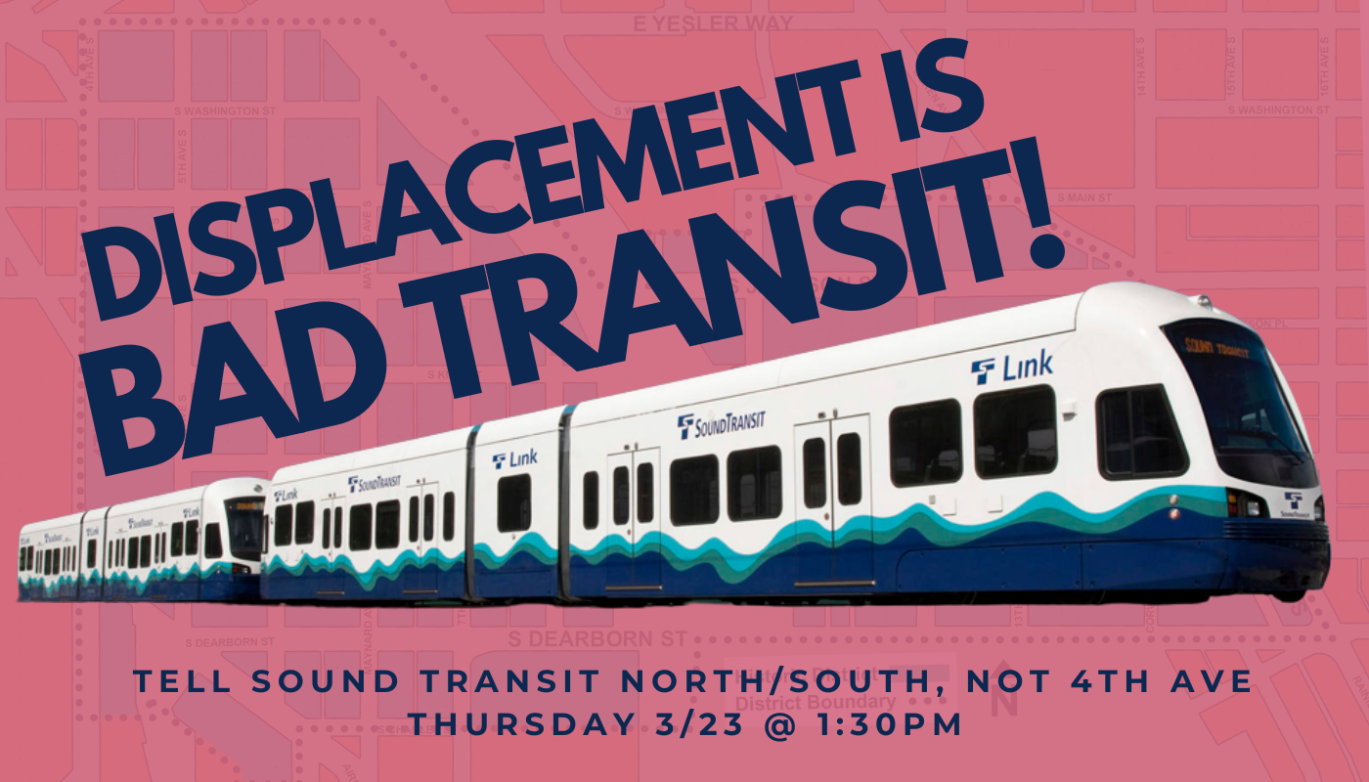
How are we showing up?
Read the open letter supporting the North/South alternative, signed by dozens of small businesses and organizations, and hundreds of community members. Read statements from community leaders.
Learn More
Op-eds:
Other media coverage:
Residents, workers, and community members of the CID standing against displacement and gentrification is not NIMBYism. “Not In My Backyard” refers to people who reject projects such as landfills and shelters being built in their neighborhood. NIMBYs often are middle/upper class white people with social/political capital/power. This is how public projects like landfills, jails, freeways, and transit hubs are built in low income communities of color who are not afforded the same rights and respect as NIMBYs.
The CID is a redlined low-income neighborhood of color, and a historic neighborhood at that. NIMBYism implies structural power that neighborhood doesn’t have. The way the City and developers use the CID as a “gateway to downtown” does not serve the actual neighborhood.
For more information on gentrification, check out How to Kill A City available at Seattle Public Libraries.